Friday, November 27, 2020

Welcome to Klansville, USA


    This is a history of hate in America — not the natural discord that characterizes a democracy, but the wild, irrational, killing hate that has led men and women throughout our history to extremes of violence against others simply because of their race, nationality, religion or lifestyle.


    Since 1865, the Ku Klux Klan has provided a vehicle for this kind of hatred in America, and its members have been responsible for atrocities that are difficult for most people to even imagine. Today, while the traditional Klan has declined, there are many other groups which go by a variety of names and symbols and are at least as dangerous as the KKK.


    Some of them are teenagers who shave their heads and wear swastika tattoos and call themselves Skinheads; some of them are young men who wear camouflage fatigues and practice guerrilla warfare tactics; some of them are conservatively dressed professionals who publish journals filled with their bizarre beliefs — ideas which range from denying that the Nazi Holocaust ever happened to the contention that the U.S. federal government is an illegal body and that all governing power should rest with county sheriffs.


    The Klan itself has had three periods of significant strength in American history — in the late 19th century, in the 1920s, and during the 1950s and early 1960s when the civil rights movement was at its height. The Klan had resurgence again in the 1970s, but did not reach its past level of influence. Since then, the Klan has become just one element in a much broader spectrum of white supremacist activity.Released in 1915, Birth of a Nation was a cinematic masterpiece that set new standards for the fledgling film industry. The story it tells fits perfectly into the version of history the Klan preaches. A romantic version of the Klan was depitced as heroes protect White America from the ‘beast’ that were the negro. Birth of a Nation lead to the boom in Klans members as immigrants came in hoards.


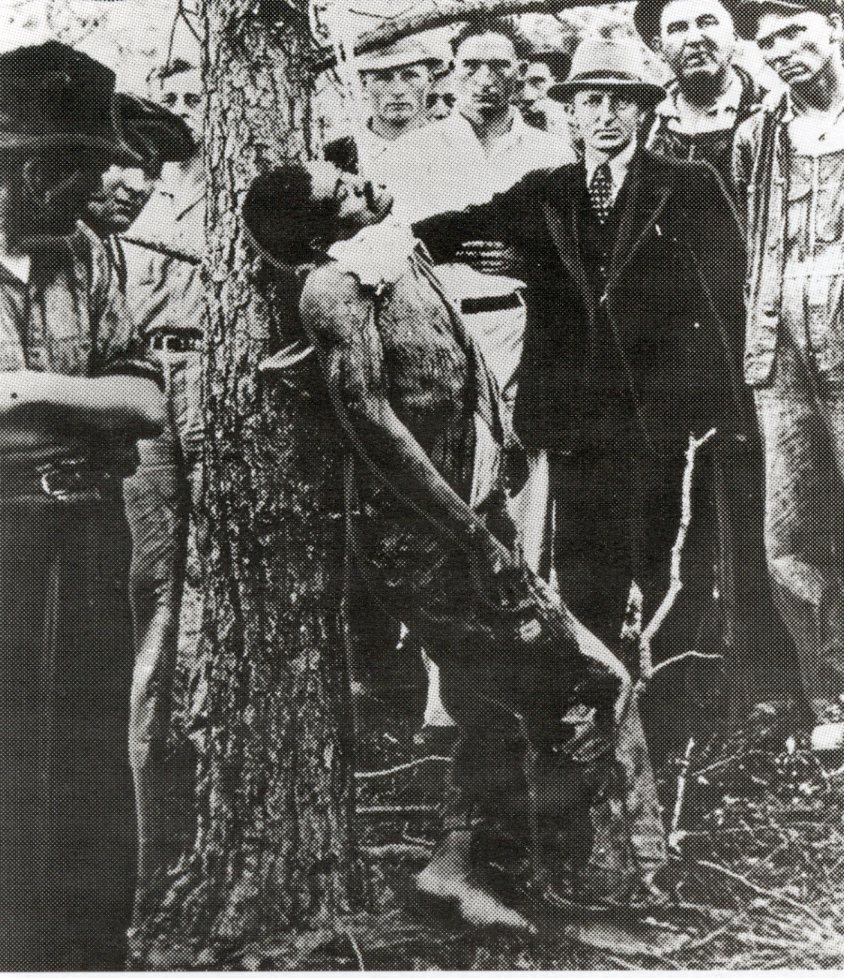
    The Klan launched a campaign of terrorism in the early and mid-1920S, and many communities found themselves firmly in the grasp of the organization. Lynching’s, shootings and whippings were the methods employed by the Klan. Blacks, Jews, Catholics, Mexicans and various immigrants were usually the victims.However, not infrequently, the Klan’s targets were whites, Protestants and females who were considered “immoral” or “traitors” to their race or gender. In Alabama, for example, a divorcee with two children was flogged for the “crime” of remarrying and then given a jar of Vaseline for her wounds. In Georgia, a woman was given 60 lashes for a vague charge of “immorality and failure to go to church”; when her 15-year-old son ran to her rescue, he received the same treatment. In both cases, ministers led the Klansmen responsible for the violence. But such instances were not confined to the South. In Oklahoma, Klansmen applied the lash to girls caught riding in automobiles with young men, and very early in the Klan revival, women were flogged and even tortured in the San Joaquin Valley of California.

In a period when many women were fighting for the vote, for a place in the job market and for personal and cultural freedom, the Klan claimed to stand for “pure womanhood” and frequently attacked women who sought independence.


Saturday, November 21, 2020

Regents of the University of California v. Bakke


     In Regents of University of California v. Bakke (1978), the Supreme Court ruled that a university's use of racial "quotas" in its admissions process was unconstitutional, but a school's use of "affirmative action" to accept more minority applicants was constitutional in some circumstances. The case involved the admissions practices of the Medical School of the University of California at Davis. The medical school reserved 16 out of 100 seats in its entering class for minorities, including "Blacks," "Chicanos," "Asians," and "American Indians." The rigid admissions quota was administered by a special school committee.     

    Allan Bakke, a white applicant, was twice denied admission to the medical school even though his MCAT scores, GPA, and benchmark scores were "significantly higher" than those of some minority applicants recently admitted. Bakke sued the University of California in a state court, alleging that the medical school's admission policy violated Title VI of the Civil Rights Act of 1964 and the Fourteenth Amendment's Equal Protection Clause. The California Supreme Court agreed, finding that the quota system explicitly discriminated against racial groups and holding that "no applicant may be rejected because of his race, in favor of another who is less qualified, as measured by standards applied without regard to race." The medical school, ordered to shut down its quota system, appealed to the U.S. Supreme Court, which reviewed the case in 1978.


    The Court held that the medical school racially discriminated against whites because it excluded them from 16 out of 100 spots solely by virtue of their race. The fact that blacks have historically had been discriminated against more than whites was irrelevant to this case, because racial quota systems, whether applied against whites or blacks, are always "odious to a free people whose institutions are founded upon the doctrine of equality." Indeed, because the school's quota was designed to redress past discrimination against racial minorities, the Court stated, it was intended to prefer "one group for no other reason other than race or ethnic origin." Thus, the Court ruled that the school's quota system "must be rejected ... as racially invalid" under the Equal Protection Clause.


Wednesday, November 18, 2020

The Black Panther Party for Self-Defense


 On October 15, 1966, College students Bobby Seale, Huey P. Newton, and Elbert Howard founded “The Black Panther Party for Self-Defense” in Oakland, California. Like Malcolm X, the Black Panthers believed that nonviolent protests could not truly liberate black Americans or give them power over their own lives, leading them to become the most influential black militant movement of the era, with reigns in similar movements in Africa and Southeast Asia.


    Disappointed in the failure of the civil rights movement to improve the condition of blacks outside the South, the young men began to organized young, poor, disenfranchised African Americans into the Black Panther Party. They saw brutality against civil rights protesters as part of a long tradition of police violence and state oppression and felt it was something they no longer could stand. As the group began to immerse themselves in Black History; the idea of self-survival was implicated.


    The BPP chose to teach, protect, and serve the Black communities around them while also lending a hand to all they saw as oppressed as the belief, all oppressed people are our people, took a hand. The Yellow Peril, the BPP’s Asian counterparts even found support and solidarity within the Black Community.

    Women-led chapters focused their attention on community “survival programs.” They organized a free breakfast program for 20,000 children each day as well as a free food program for families and the elderly. They sponsored schools, legal aid offices, clothing distribution, local transportation, and health clinics, and sickle-cell testing centers in several cities. They campaigned for prison reform, held voter registration drives, and created Freedom Schools in nine cities including the noteworthy Oakland Community School, led by Ericka Huggins from 1973 to 1981. They also assisted in Cesar Chavez's United Farm Workers union boycott against Safeway. These activities provided concrete aid to low-income communities and drew support for the Panthers.

Reconstruction Era: Hostile Road to Recovery

The reconstruction era was the period that followed the American Civil War and during which attempts were made to redress the inequities o...